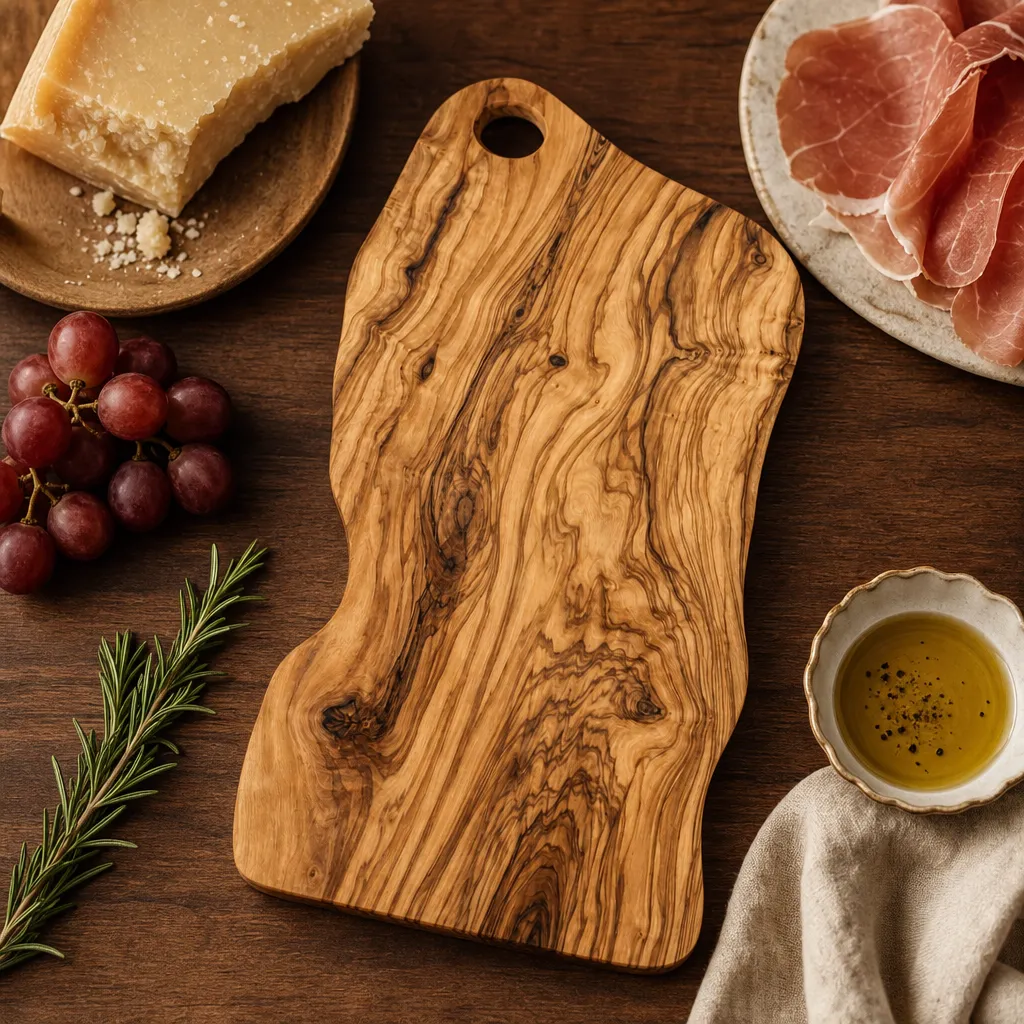
The Real Reason Your Wooden Board Split — And It Isn’t The Dishwasher
Look at where it opened. If the crack runs in a straight line, it was never your fault.
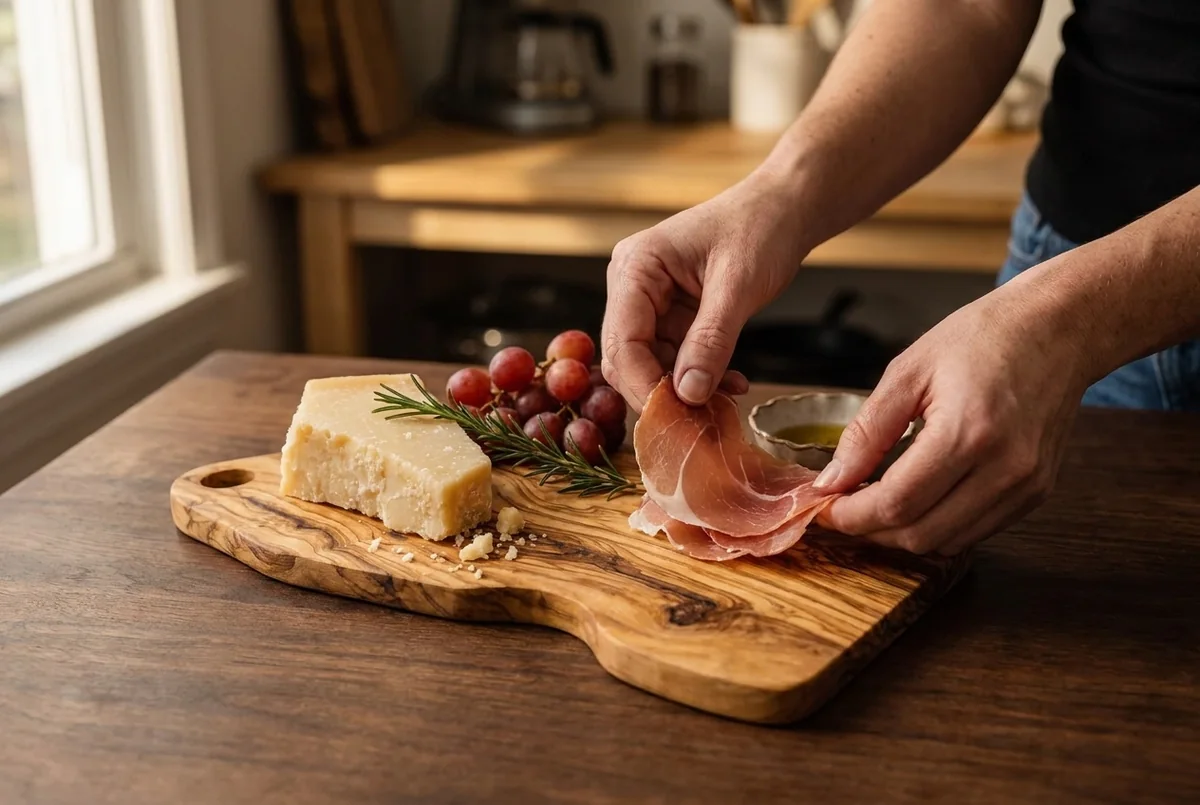
Ask around and everyone blames themselves: too much water, not enough oil, the dishwasher that one time. Then look at the break itself. On woodworking forums the same sentence comes back again and again — every cracked board they have seen cracked along a glue seam.
Most wooden boards are three to six strips bonded edge to edge. Water finds the joint, the bond lets go, and the board opens along a line that was built into it long before it reached your kitchen.
The board this report is about is one piece of olive wood, and it sells for $77 direct. On a shop shelf, a comparable single-slab olive wood board is priced at around $200. Nothing has been taken out of the board to reach the lower number — the difference is the length of the chain behind it.
What follows is what the material actually does: how one slab behaves against glued strips, against bamboo and against plastic, what you can check yourself on the board in your hands, and what the $77 covers.
What “Single Slab” Actually Means
A board is either one piece of wood or it is several. That single fact decides most of what happens to it over the next ten years — how it splits, how it holds water, how it ages.
Take an ordinary wooden board apart in your head. It starts as strips of wood, usually three to six, pressed together edge to edge with adhesive and sanded flat so the seams almost disappear. Almost. The seam is still there; it has only stopped being visible. A single slab has no seam to hide.
This board is cut from one continuous piece of olive wood. There is no adhesive inside it, no veneer over it, and no joint running through it.
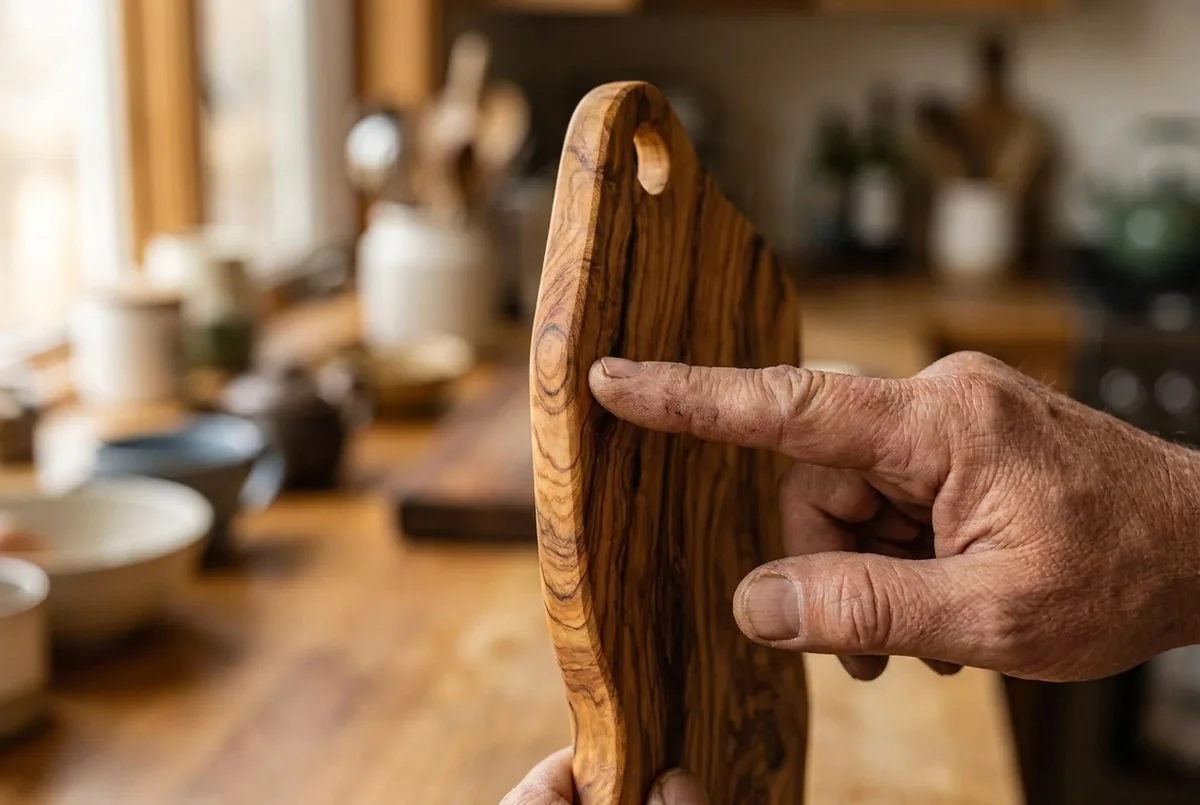
You can check that without any tools. Look at the edge, pick one line in the grain, and follow it from the top face round to the underside. On a glued board the line stops at the seam. On a single slab it keeps going.
Everything below comes out of that one difference.
Why Glued Boards Open Along A Straight Line
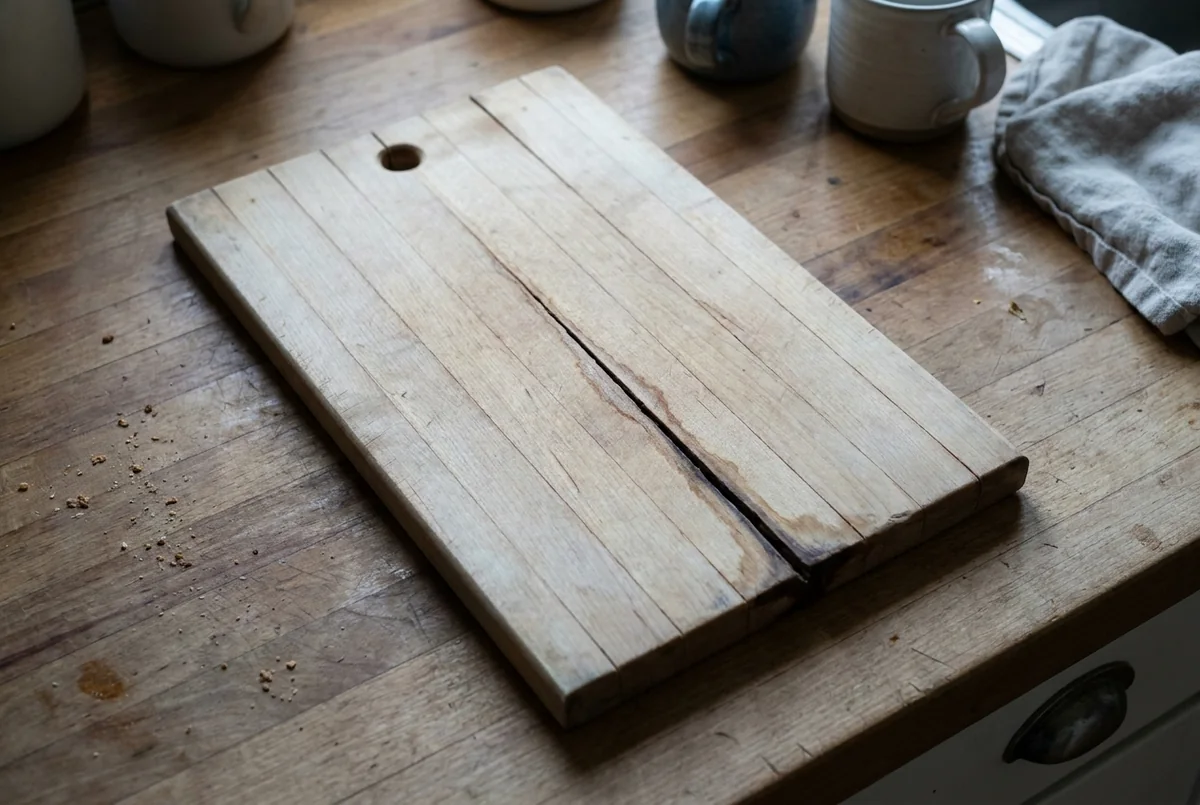
Almost everyone who has cracked a wooden board blames themselves — too much water, not enough oil, the dishwasher that one time. Then look at where it actually opened. If the crack runs in a straight line rather than wandering with the grain, it followed a glue seam, and that seam was in the board before you ever used it.
Wood moves. It takes on moisture and gives it back with the seasons, and it swells and shrinks a little every time it does.
Two strips glued edge to edge move independently of each other. The adhesive between them does not. After a few years of that push and pull, the bond gives up along its weakest run.
Water speeds it up. It finds the joint, sits in it, freezes and thaws in it, and every cycle opens it a little further.
A board with no glue in it has nothing to come unstuck.
That does not make a single slab indestructible. Wood is wood: it can dent, it can stain, and it can check at the end grain if it is left soaking. But it cannot open along a seam it does not have.
It is also why a single slab either cracks unpredictably or not at all, while glued boards fail in the same recognisable straight line.
Bamboo Is Not Wood — It Is A Grass, And It Carries Silica
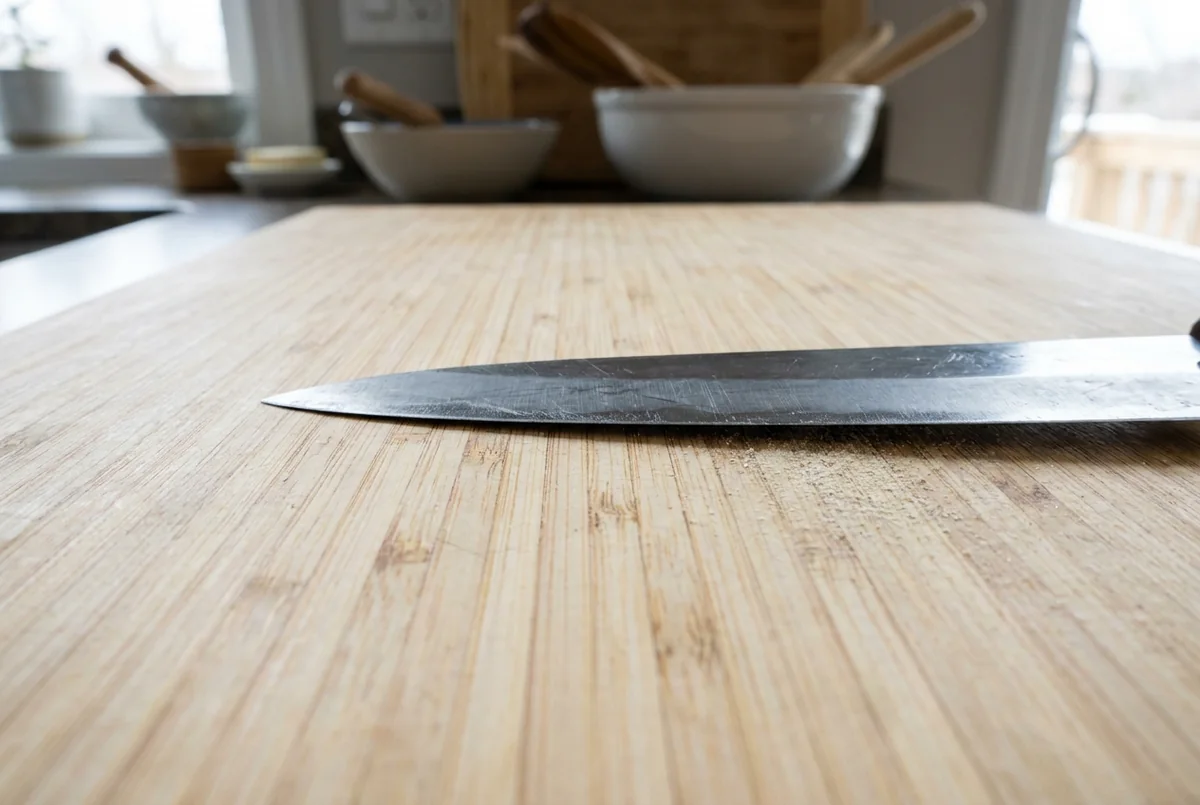
Bamboo is sold as the gentle, sustainable option. It is neither soft nor, strictly speaking, wood.
Bamboo is a grass. To hold itself upright it stores silica in its fibres — the same mineral family as sand and glass. On the mineral hardness scale silica sits above hardened knife steel.
That matters for one reason. Every pass of a blade across a bamboo board is steel meeting something harder than itself, and the edge is what gives way.
The effect is slow, which is exactly why it goes unnoticed.
A blade does not chip on a bamboo board. It rounds. Over a few months of daily use the edge stops biting into a tomato skin and starts sliding off it, and most people conclude the knife simply needs sharpening more often than it used to. It does — because of what it is being cut on. A thin, hard blade shows it first, since there is less steel behind the edge to give.
Olive wood carries no silica. It is dense enough to take a knife without scarring badly, and soft enough to let the edge through.
Bamboo is a grass, not a hardwood. Its fibres store silica for structural strength, and silica is harder than the steel a kitchen knife is ground from.
What A 2023 Study Measured Coming Off Plastic Boards
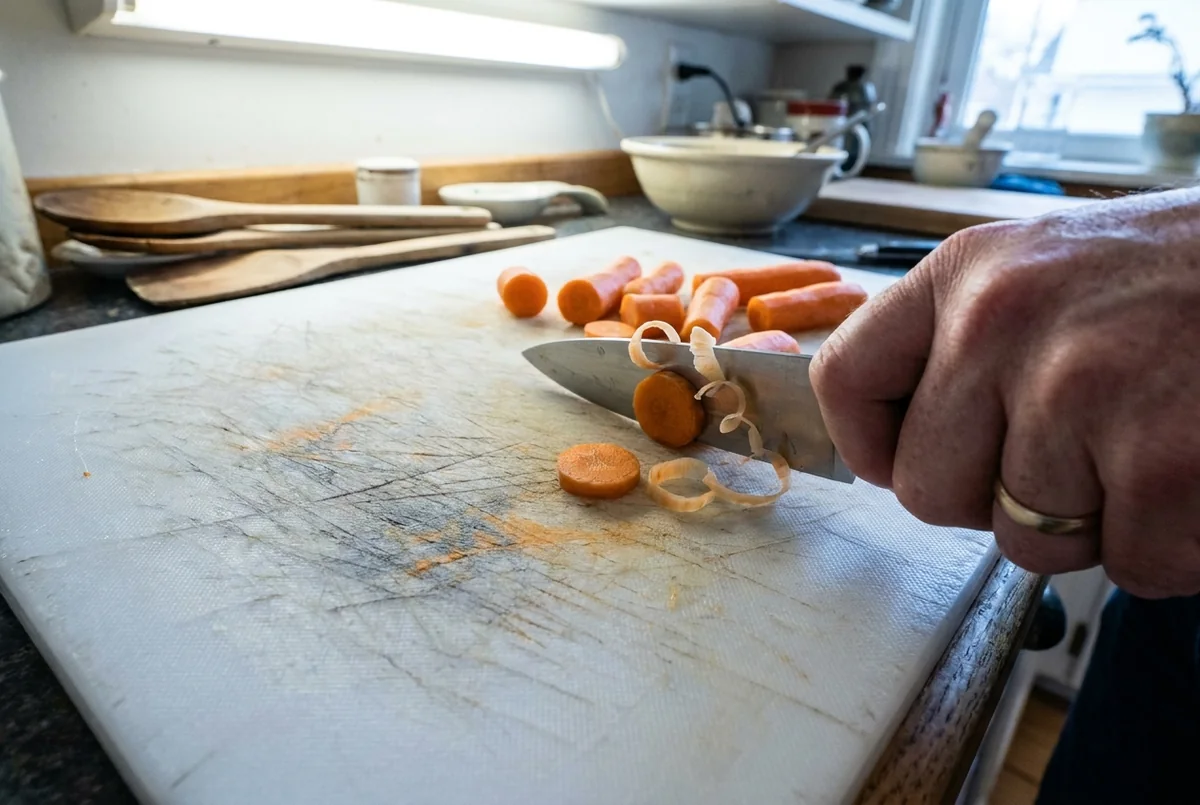
In 2023 a team at North Dakota State University published a study in the American Chemical Society journal Environmental Science & Technology. The question was plain: when a knife scores a plastic board, where does the missing plastic go?
They chopped on ordinary polyethylene boards, and then they weighed what had come off.
The figure they reported was between 7.4 and 50.7 grams a year for a household chopping board — tens of millions of individual particles, most of them far too small to see.
The study measured the exposure. It did not test what that exposure does to a person, and this page is not going to claim that it did.
What it does settle is simpler: a plastic board gets lighter with use, and the weight it loses goes somewhere.
Most people have never been shown that number at all.
A board being scored by a knife is a board shedding material. Wood is scored too — the difference is that what comes off wood is wood.
Why It Is $77 And Not $200
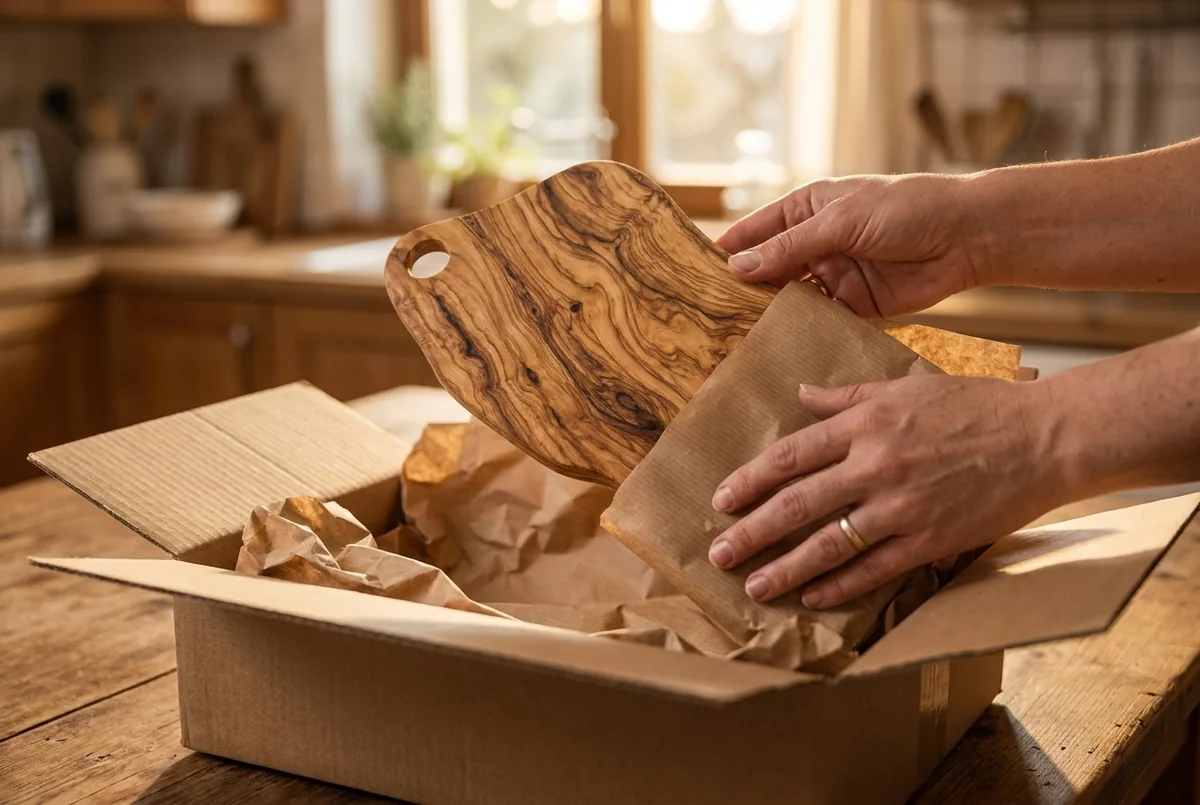
A single-slab olive wood board this size is normally priced at around $200 in a shop.
That price is not mostly the board. Anything that reaches a shelf has to pay for the shelf — the buyer who selected it, the warehouse it waited in, the floor space it sat on, and a margin taken at every pair of hands between the maker and the till.
Sold direct, none of that sits in the price. It is the same piece of wood, cut the same way, at $77.
There is no trick in the gap and nothing has been removed from the product to reach it. It is the same object with a shorter chain behind it.
Both numbers are real. $77 is what you pay here; around $200 is what the same board costs once it has a shop to support.
What You Can Check Yourself
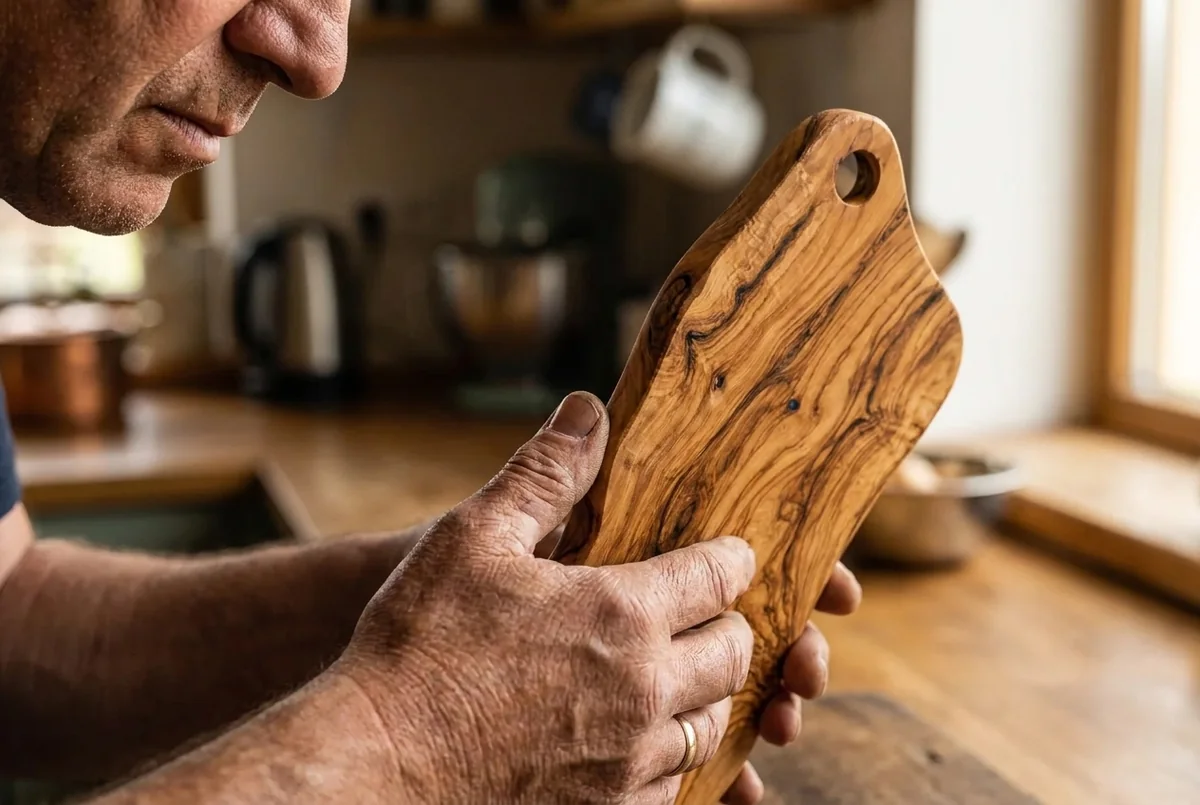
Nothing on this page has to be taken on trust. Each claim is something you can verify on the board itself, in your own kitchen, within a minute of unwrapping it. Three checks, no tools needed, and each one either passes or it does not.
Follow one line of grain from the top face, over the edge, to the underside. If it runs continuously, the board is one piece.
Run a fingertip along every edge. A glued board has a seam you can feel even when you cannot see it. A single slab has none.
Weigh it in your hand. A board this size in olive wood comes in at around four pounds — dense, never hollow-feeling.
None of those are marketing tests. They either pass or they do not, and they take under a minute between them.
If any of them fails, the board is not what this page says it is — which is what the return window is there for.
Five Things That Separate This Board
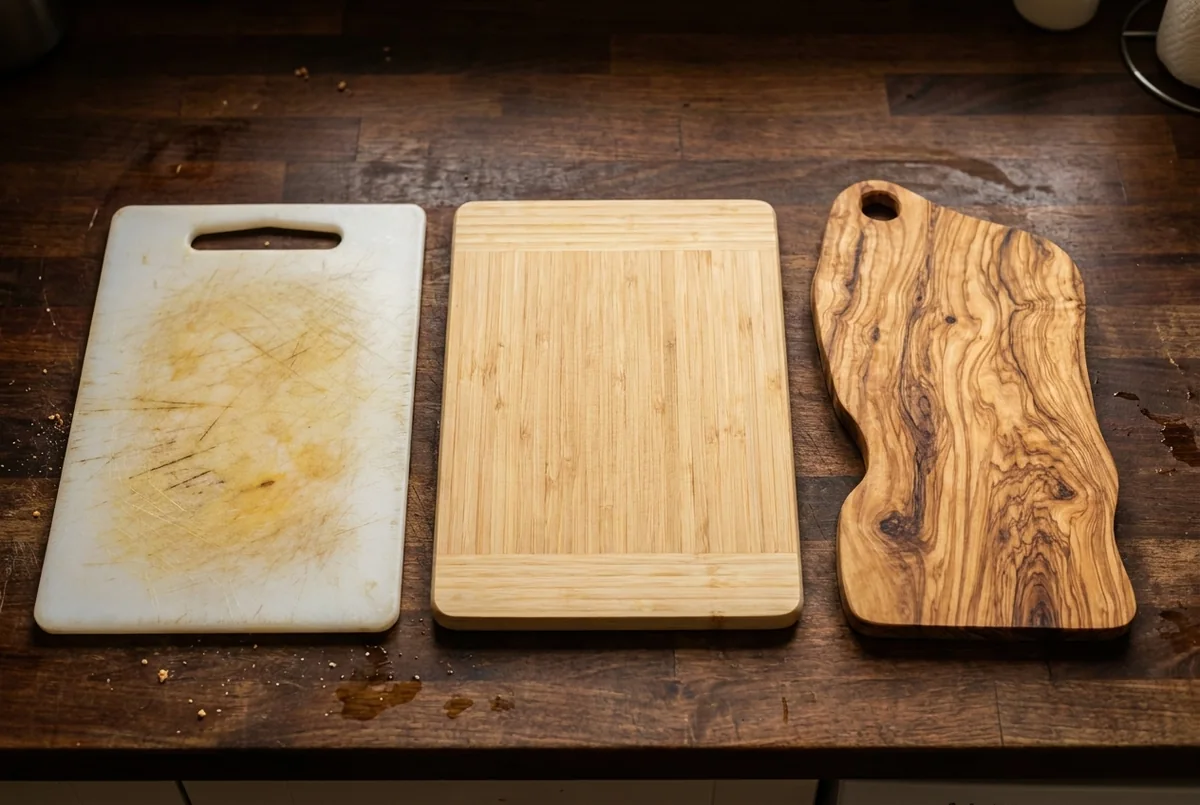
Five features distinguish a single-slab olive wood board from the laminated and bamboo boards sold next to it.
Single-slab construction: cut from one continuous piece of olive wood, with no adhesive line running through it and therefore no seam that can open.
No silica in the material: olive wood is a hardwood, not a grass. There is nothing mineral in it to round off a blade over time.
Dense, close grain: olive wood is heavy for its size, which is why it takes knife marks without scarring and why the surface stays flat instead of dishing out in the middle.
Food-safe oil finish: finished with a food-safe oil rather than a sealed film, so the surface can be re-oiled at home instead of peeling.
A grain pattern that cannot repeat: the swirl comes from the trunk the board was cut from, so no two boards carry the same figure.
CHECK AVAILABILITYWhat You Get, And What It Costs
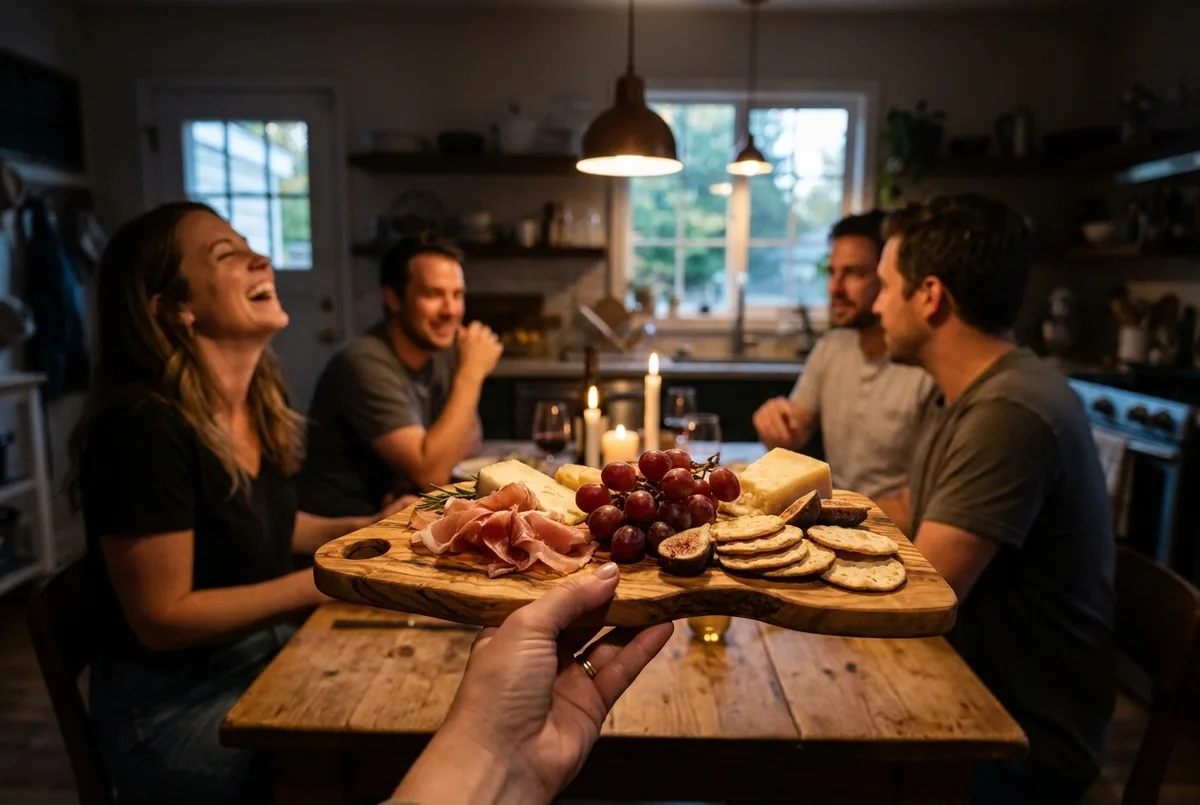
One board. One piece of olive wood, roughly four pounds, finished on both faces and usable on either.
$77 for a single board, shipped direct. The same board on a shop shelf is priced at around $200.
Shipping is tracked, and there is a 30-day return window if the board is not what you expected once you unwrap it.
Two more things worth knowing before you decide.
Olive wood is a natural material. Colour and figure vary from board to board — the one you receive will not look exactly like the one photographed here.
It is a board, not an ornament. It is meant to be cut on, wiped down, and re-oiled once in a while.
The price on this page is the price charged at checkout. Nothing is added at the last step, and there is no subscription attached to it.
If you cook on plastic and would rather not, or you have already replaced a split board more than once, this is the board that removes the reason in both cases.
Alba · single-slab olive wood boards